Pressure Washing vs Soft Washing: Which Is Right for Arizona Homes?
· By Will Cortes
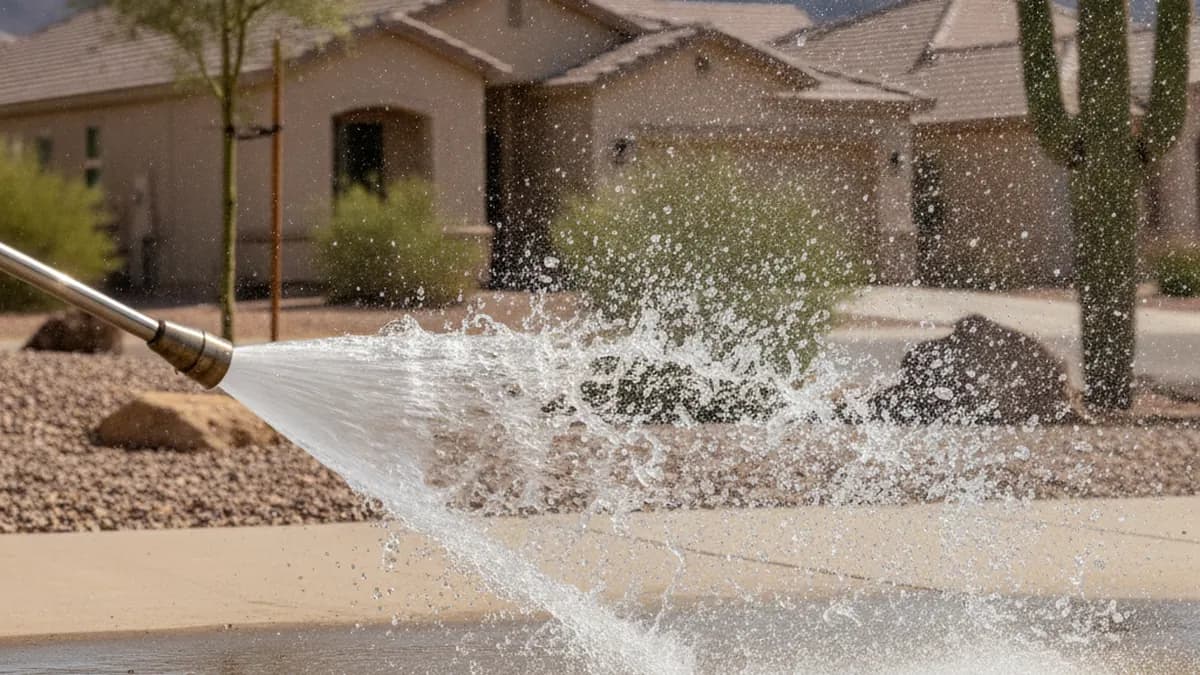
When people say they want their house pressure washed, they usually mean they want it clean. The method behind that result matters more than most homeowners realize. High pressure is the right tool for some surfaces and the wrong one for others, and using it everywhere can leave you with etched concrete, eroded stucco or peeling paint.
Soft washing is the alternative: low pressure combined with cleaning solutions that do most of the work. Most professional exterior cleaning jobs actually use both methods, each on the surfaces where it fits. Here is how they compare and which one belongs on each part of an Arizona home.
What pressure washing is
Pressure washing uses a machine that pushes water at high pressure, often in the range of a few thousand PSI for professional units, to physically blast dirt and stains off a surface. On flat concrete it is usually paired with a rotary surface cleaner, which spins the spray inside a housing to clean evenly and avoid the striped look a single wand can leave.
It works best on hard, durable surfaces: concrete driveways, sidewalks, garage floors, block walls and some types of stone. Hot water or degreasers are often added for oil and grease.
What soft washing is
Soft washing uses water at very low pressure, close to a garden hose, plus detergents or cleaning solutions designed for the surface. The solution is applied, allowed to dwell so it can break down dirt, mildew or organic growth, and then rinsed gently.
Because the cleaning is chemical rather than mechanical, soft washing is safer for softer or coated surfaces: stucco, painted walls, wood trim, fascia, eaves, window frames and tile roofs. A careful operator also protects plants and rinses landscaping during and after the job.
Which method for each surface of an Arizona home
Stucco walls: soft wash. Stucco is porous and textured, and high pressure can erode the finish coat, drive water behind it, or leave visible wand marks. Low pressure with a mild detergent removes dust and dirt lines while keeping the texture intact.
Painted surfaces, trim and garage doors: soft wash. High pressure can lift paint, especially on surfaces already faded and chalky from years of Arizona sun.
Concrete driveways and walkways: pressure wash. Concrete can handle higher pressure, and a surface cleaner gives the most even result. Oil stains need pre-treatment either way.
Pavers, travertine and flagstone: a middle path. Moderate pressure with the right technique, so joint sand is not blown out, often followed by re-sanding and sealing.
Block walls and fences: usually pressure washing at a moderate setting, adjusted if the wall is painted or stuccoed.
The risks of using the wrong method
Too much pressure on concrete can etch the surface, exposing aggregate and leaving permanent lines. On stucco, it can chip the finish and push water into cracks. On paint, it can strip patches and make a repaint necessary sooner. On pavers, it can empty the joints, which lets pavers shift and weeds grow.
The wrong chemicals carry their own risks. Strong solutions applied carelessly can discolor surfaces or harm plants. That is why technique and product choice matter as much as the machine.
Why Arizona homes lean toward soft washing for walls
Most homes in the East Valley, from San Tan Valley to Gilbert and Chandler, are finished in stucco with painted trim. Years of UV exposure make paint more fragile, and stucco is already designed to be breathable rather than sealed. Both are reasons to keep pressure low on vertical surfaces.
The dirt on Arizona walls is also mostly dust, mud splash from monsoon storms, and hard water spots from sprinklers. Those respond well to detergent and gentle rinsing, and hard water spots often need a mineral-specific cleaner rather than more force.
Cost and time differences
For flatwork, pressure washing is usually faster and is priced by area or as a flat rate. Soft washing a house exterior takes more care around windows, plants and fixtures, and includes the cost of cleaning solutions, so the price reflects the size of the home and how many stories it has.
On most full-property jobs, the quote combines the two: soft washing for the house and pressure washing for the driveway, walkways and patio. Asking how each area will be cleaned is a good way to judge whether a company knows its craft.
Questions to ask before you book
A few simple questions reveal a lot about how a company works. Ask which method they will use on your walls, your driveway and your pavers, and why. Ask what cleaning solutions they use and how they protect plants, pool water, outdoor lights and electrical outlets during the job. Ask whether they use a surface cleaner on concrete or only a handheld wand, since that affects how even the finish looks.
It also helps to ask what is realistic for your specific stains. A clear answer such as old oil will lighten but may not disappear completely is a better sign than a promise that everything will look brand new. Finally, confirm what the quote includes, such as re-sanding pavers or treating hard water spots, so there are no surprises on the day of service.
If you are in San Tan Valley, Queen Creek or anywhere nearby in the East Valley, Splash N StyLin is happy to walk you through the plan for each surface before any work begins.
Frequently asked questions
- Is soft washing better than pressure washing?
- Neither is better overall. Soft washing is safer for stucco, paint, trim and roofs, while pressure washing is more effective on concrete and other hard flat surfaces. Most jobs use both.
- Can you pressure wash stucco in Arizona?
- Stucco should be cleaned at low pressure with a proper detergent. High pressure can erode the finish and drive water into cracks, so soft washing is the safer method.
- Will pressure washing damage my concrete driveway?
- Not when done correctly. Using a surface cleaner at the right pressure gives an even result. Damage usually comes from holding a narrow nozzle too close for too long.
- Does soft washing remove hard water stains?
- Not always. Hard water spots are mineral deposits that usually need a masonry-safe cleaner made to dissolve them, followed by a rinse.
- Who offers house and driveway washing in San Tan Valley?
- Splash N StyLin cleans homes, driveways and pavers across San Tan Valley and the East Valley. Call or text (520) 371-8081 for a free estimate.
Found this helpful? Make us a preferred source on Google.
Ready for an exact price?
Get a free, no-pressure in-home estimate. Real numbers for your home, not a phone guess.