Driveway and Paver Cleaning in Arizona: Removing Oil, Hard Water and Efflorescence
· By Will Cortes
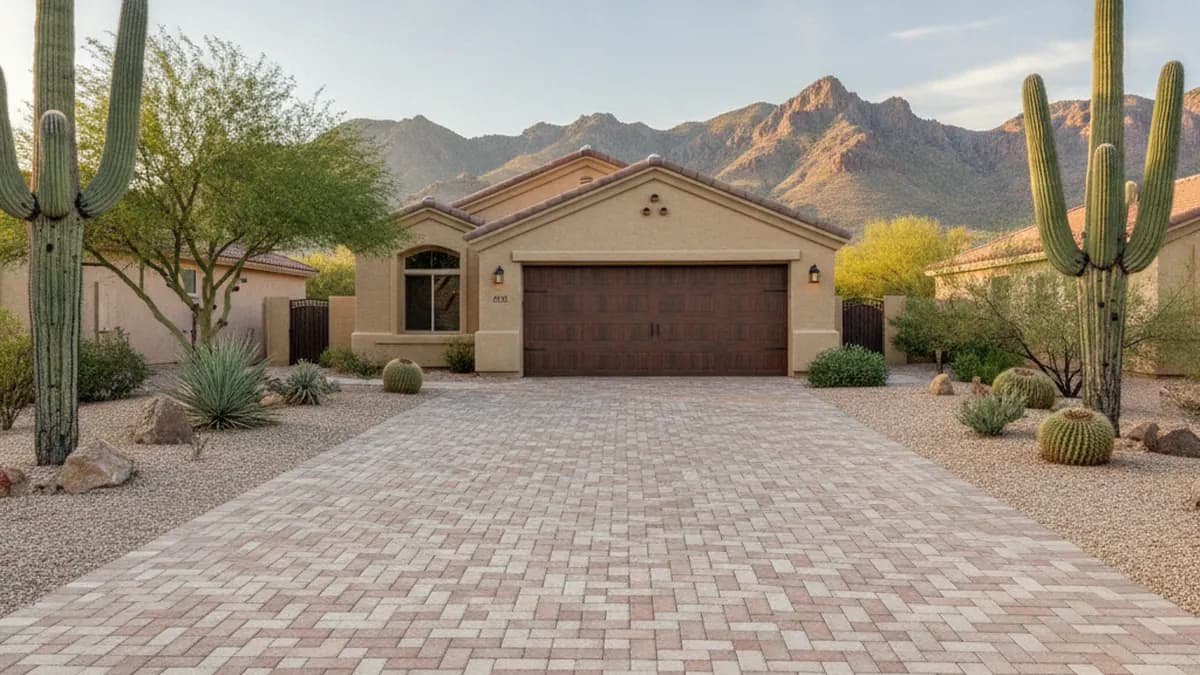
A driveway is the first thing people see when they pull up to your home, and in Arizona it takes a beating. Cars drip oil, sprinklers spray mineral-heavy water, monsoon storms wash mud across the surface, and the sun cooks everything into place. Pavers face all of that plus efflorescence, the chalky white haze that seems to appear out of nowhere.
The good news is that most of these stains can be removed or greatly reduced. The key is knowing what you are dealing with, because oil, hard water and efflorescence each respond to a different treatment. Using the wrong one wastes time and can even make things worse.
Identify the stain before you clean
Oil and automotive fluids show up as dark, often shiny or rainbow-edged spots where cars park. Older oil stains turn gray and sink into the concrete. Hard water stains are white or light gray rings and streaks, usually in arcs that match where sprinklers reach. Efflorescence looks like a white powdery bloom spread across the surface of pavers or new concrete, not in sprinkler patterns.
Rust is orange or brown and usually comes from fertilizer, metal furniture, or iron in irrigation water. Tire marks are black streaks from hot tires turning on the surface. Organic stains from leaves, palm fruit and pet accidents are brown or dark and often irregular.
Removing oil stains from concrete and pavers
Oil does not dissolve in water, so pressure alone rarely gets it out. Professional cleaning usually starts with a degreaser that breaks down the oil and lifts it from the pores of the concrete. The product sits for a few minutes, gets agitated with a brush, and is then rinsed with hot or high-flow water.
Fresh oil comes out much more completely than old oil. A drip that has been baking under the Arizona sun for a year or two may leave a faint shadow even after treatment, because some of it has migrated deep into the slab. Repeat treatments can lighten it further, but it is honest to expect improvement rather than perfection on very old stains.
On pavers, the same process is done more gently. Heavily stained individual pavers can sometimes be flipped or replaced if cleaning does not get the result you want.
Dealing with hard water rings
Hard water stains are mineral deposits, mostly calcium and magnesium. Because they are alkaline, they respond to mild acid-based cleaners designed for masonry, followed by a thorough rinse. Pressure washing by itself often only polishes the surface of mineral deposits without removing them.
The real fix is prevention. Adjust or replace sprinkler heads so they stop spraying the driveway, walls and pavers. Many East Valley homes have overspray patterns that rebuild the same white rings within months of a cleaning. Fixing a few heads is often the best investment you can make in keeping your hardscape clean.
What efflorescence is and how it is treated
Efflorescence is not dirt. It is salt that migrates from inside concrete, pavers or the base below them. Water moves through the material, carries dissolved salts to the surface, and leaves them behind as it evaporates. In Arizona, where water evaporates quickly, the white haze can show up fast, especially on newer pavers and after monsoon rains or heavy irrigation.
Light efflorescence sometimes fades on its own over time. Heavier blooms are usually treated with a cleaner made specifically for efflorescence, then rinsed and allowed to dry fully. Pressure washing alone can push more water into the pavers and bring more salts up, which is why the process matters.
Once the surface is clean and completely dry, a breathable sealer can help reduce how much water moves through the pavers. Sealing over active efflorescence is a mistake, because it traps the haze under the sealer.
Re-sanding and sealing after cleaning
Cleaning pavers properly often removes some of the sand between them, and old joints may already be empty from monsoon runoff or weeds. Re-sanding, often with polymeric sand, refills the joints, locks the pavers together and helps block weeds and ants.
Sealing is optional but popular in Arizona because it protects against UV fading, makes oil easier to clean up, and can enhance color. Most sealers last a few years before they need to be reapplied, depending on product, sun exposure and traffic. Concrete driveways can be sealed too, though many homeowners simply keep them on a regular cleaning schedule.
DIY tips and what to leave to a pro
For small, fresh oil spots, cover them right away with cat litter or an absorbent product, let it sit, and sweep it up. Rinse dust off regularly with a hose. Avoid using household bleach or strong acids on pavers, since they can discolor or etch the surface.
Large driveways, old oil stains, widespread efflorescence and paver jobs that need re-sanding are usually better handled by a professional with the right chemistry, surface cleaners and experience with different materials.
Getting your driveway cleaned in the East Valley
Splash N StyLin cleans driveways, walkways and pavers for homes in San Tan Valley, Queen Creek, Gilbert, Mesa, Chandler and nearby areas. Send a few photos of the stains that bother you most and we will tell you what is realistic to remove and what the job involves. Call or text (520) 371-8081 for a free estimate.
Frequently asked questions
- Can old oil stains be fully removed from a driveway?
- Fresh oil usually comes out well with a degreaser and pressure washing. Old stains baked in by the Arizona sun can often be lightened a lot, but a faint shadow may remain.
- What causes the white haze on my pavers?
- It is usually efflorescence, salts carried to the surface by water and left behind as it evaporates. Sprinkler hard water rings look similar but follow spray patterns.
- Does pressure washing remove hard water stains?
- Not by itself in most cases. Mineral deposits need a masonry-safe cleaner that dissolves them, followed by a rinse. Fixing sprinkler overspray keeps them from coming back.
- Should I seal my pavers after cleaning?
- Sealing is a common choice in Arizona because it helps resist UV fading and stains. It should only be applied once the pavers are clean, efflorescence is treated and the surface is fully dry.
- How much does driveway cleaning cost in Arizona?
- A standard concrete driveway typically falls somewhere around $80 to $250. Pavers, heavy oil stains, re-sanding and sealing add to the price. Call or text (520) 371-8081 for a free estimate.
Found this helpful? Make us a preferred source on Google.
Ready for an exact price?
Get a free, no-pressure in-home estimate. Real numbers for your home, not a phone guess.